

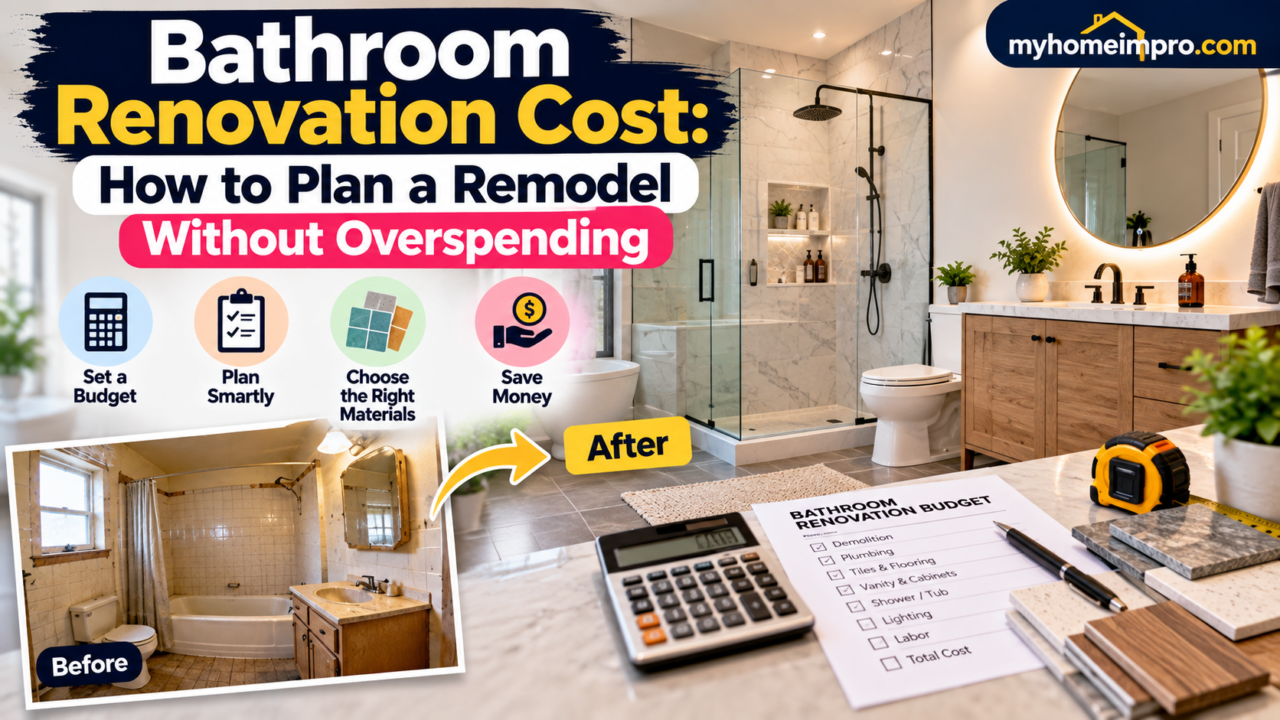
A bathroom renovation can completely change how a home feels, but it is also one of those projects where costs can rise quickly.
Tiles, plumbing, fixtures, waterproofing, electrical work and labour all need to be considered before the first wall is opened.
The easiest way to control a bathroom renovation budget is to plan the work before buying materials.
Start With the Scope
Table of Contents
First decide what you actually want to change.
A cosmetic update might include:
- Paint
- Mirrors
- Lighting
- Accessories
- Storage
- Fixtures
A major renovation may involve:
- New flooring
- New wall tiles
- Plumbing changes
- Shower installation
- Toilet replacement
- Waterproofing
- Electrical work
The second category can become much more expensive because it involves construction work.
Create a Renovation Budget
Break the project into categories instead of keeping one large number.
Consider:
- Materials
- Labour
- Plumbing
- Electrical work
- Waterproofing
- Fixtures
- Cabinets or storage
- Disposal
- Delivery
- Unexpected repairs
Keep a contingency amount for problems discovered after demolition.
Older homes can reveal damaged pipes, moisture problems or other issues that were not visible beforehand.
Don’t Choose Materials Based Only on Appearance
Bathrooms are exposed to water, humidity and frequent cleaning.
A beautiful material that is difficult to maintain may become frustrating later.
When choosing materials, consider:
- Durability
- Slip resistance
- Cleaning requirements
- Water exposure
- Replacement availability
- Installation requirements
Plan the Layout Carefully
Moving plumbing can significantly increase renovation complexity.
If the existing bathroom layout works well, keeping major plumbing locations in place can sometimes reduce work.
However, layout decisions should be based on the actual bathroom rather than an assumption that every project should avoid plumbing changes.
Think About Storage
Bathrooms often become cluttered because there isn’t enough storage.
Consider:
- Wall-mounted cabinets
- Vanity storage
- Recessed shelves
- Open shelving
- Towel storage
Use the available vertical space where practical.
Lighting Matters
A bathroom may need several types of lighting.
For example:
- General lighting
- Mirror lighting
- Task lighting
- Accent lighting
Electrical work in wet areas should be planned and completed according to applicable local safety requirements.
Waterproofing Should Not Be an Afterthought
Waterproofing is one of the least exciting parts of a renovation, but it can be among the most important.
Poor waterproofing can lead to moisture damage, mould and expensive repairs.
Do not cut costs on critical waterproofing work simply to upgrade decorative finishes.
Where Can You Save Money?
You may be able to save by:
- Keeping a workable layout
- Comparing multiple material options
- Reusing suitable components
- Choosing durable mid-range finishes
- Planning purchases in advance
- Avoiding unnecessary design changes during construction
Where Should You Avoid Cutting Costs?
Be particularly careful with:
- Waterproofing
- Electrical work
- Structural changes
- Plumbing
- Ventilation
- Professional installation where required
Saving a little today can become expensive if important work has to be redone.
Final Thoughts
A successful bathroom renovation is not necessarily the most expensive one.
The best approach is to establish the scope, create a realistic budget, plan the layout and spend money where it affects durability and safety.
Good planning can make a bathroom renovation easier to manage and reduce unpleasant surprises during construction.